
Kitchen Deep Cleaning
Degreasing and detailed cleaning may cover cooking-line exteriors, equipment sides, stainless steel surfaces, walls, floors, floor edges, baseboards, and accessible areas beneath movable equipment.
Serving Austin, Texas & surrounding areas
Open 24/7
Restaurant cleaning · Austin, Texas
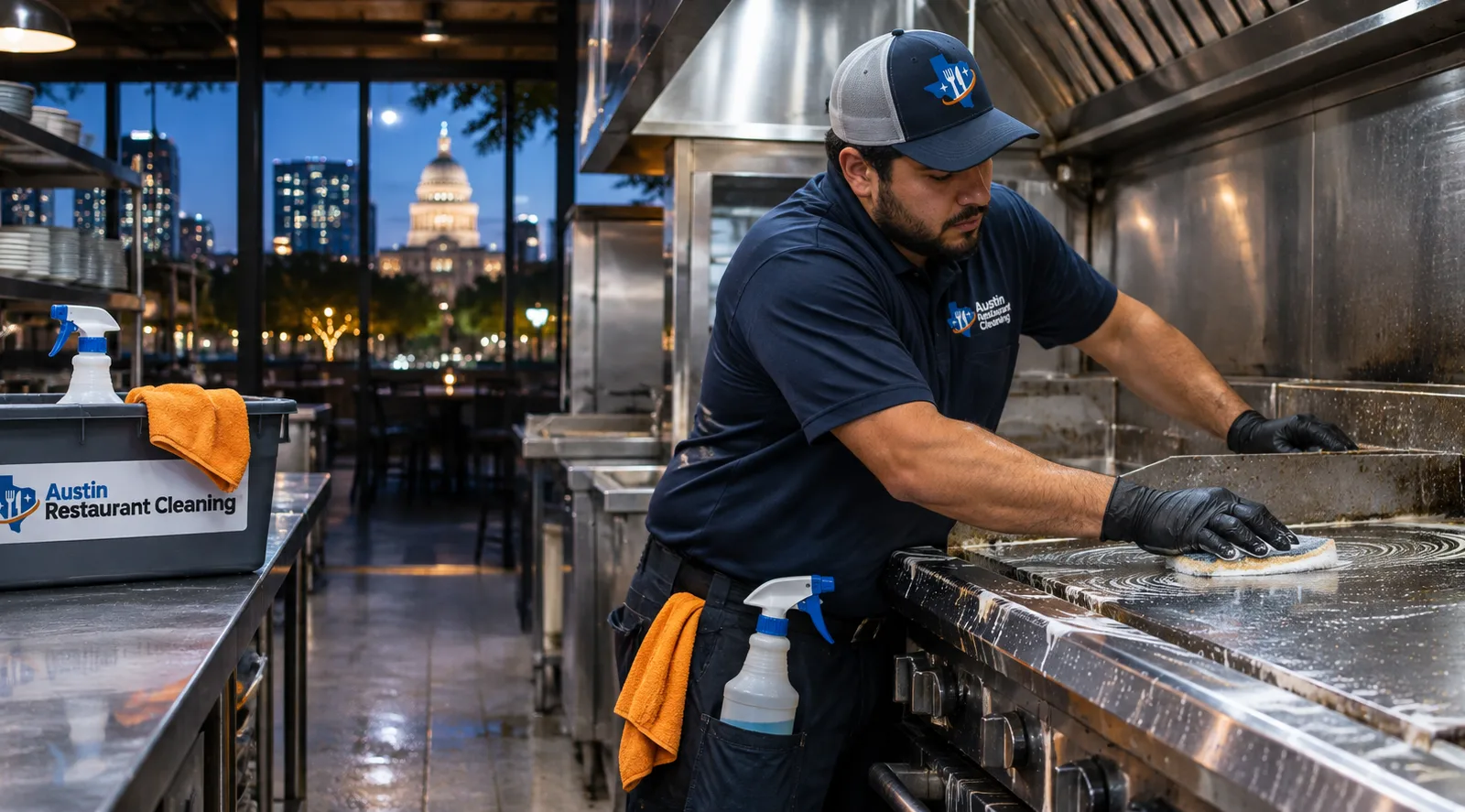
Detailed commercial kitchen cleaning planned around your equipment, operating schedule, and priority areas.
Built around active restaurants
Austin Restaurant Cleaning handles the periodic, labor-intensive work that routine closing duties may not fully address. As a Restaurant Cleaning Company, we clean commercial cooking areas, walk-in coolers, hard-to-reach surfaces, and detailed back-of-house spaces according to an agreed scope.
Our restaurant service specialists serving Austin plan the work around the kitchen's layout, equipment, access restrictions, and hours. Before cleaning starts, we identify the included areas, discuss shutdown requirements, and note surfaces that need a specific chemical or method. That preparation matters in busy restaurant districts such as East Cesar Chavez, where compact kitchens and limited loading access can affect staging, and Downtown Austin, where building access and service schedules may require advance coordination.
The result is a defined deep-cleaning plan rather than a vague promise to clean everything. Managers know what will be addressed, what needs to be moved, and how the kitchen should be prepared before the crew arrives.
Cleaning zones
Degreasing and detailed cleaning may cover cooking-line exteriors, equipment sides, stainless steel surfaces, walls, floors, floor edges, baseboards, and accessible areas beneath movable equipment.
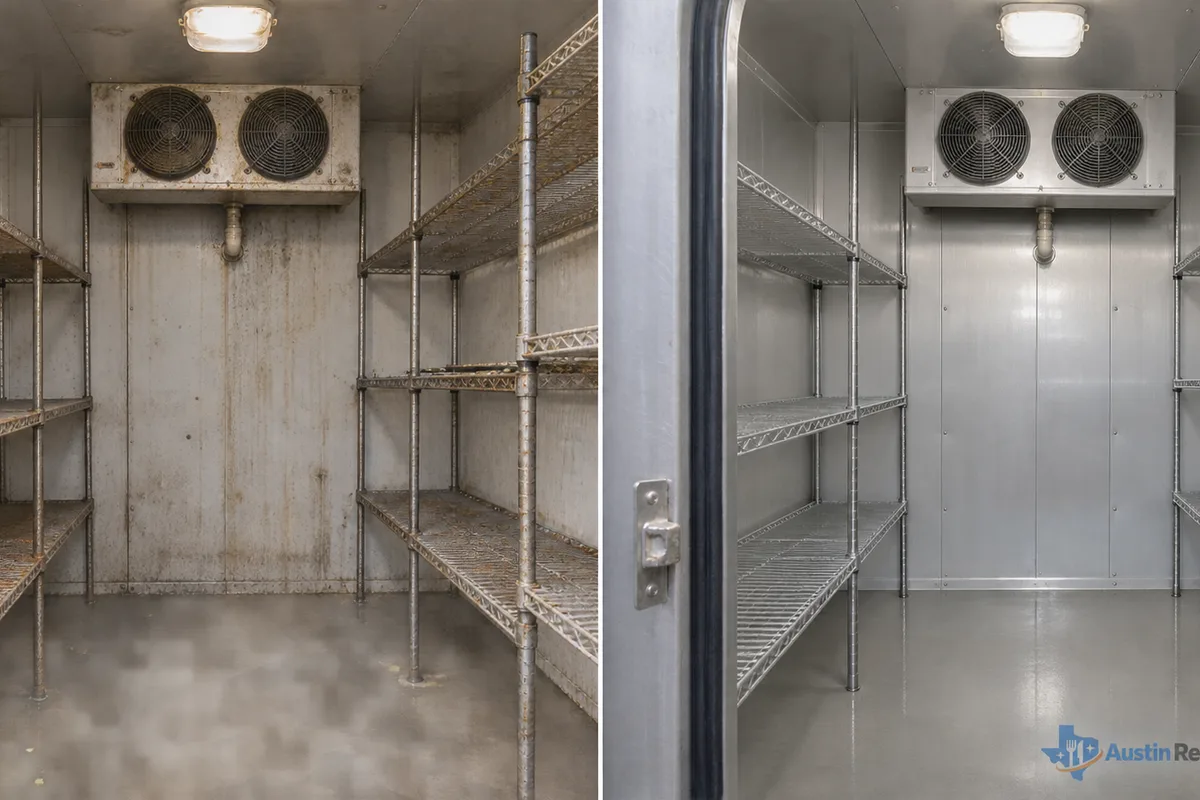
Interior floors, walls, shelving, door surfaces, handles, and gaskets can be cleaned after food is removed or protected. The scope accounts for cold temperatures, condensation, and food-safe product selection.
High Dusting Austin restaurants may need includes accessible pipes, ledges, ceiling vents, light housings, and structural surfaces where settled dust is difficult for a closing crew to reach.
When included, restaurant detailed cleaning can address dining-room edges, booths, chair bases, millwork, doors, partitions, and other areas that collect soil outside normal table and floor care.
A detailed scope may include fixtures, partitions, walls, doors, floor edges, break areas, and other frequently touched surfaces in employee and guest spaces.
Restaurants preparing for an opening, management change, inspection response, or operational reset can receive a one-time cleaning plan based on the condition of the property.
Surface-specific methods
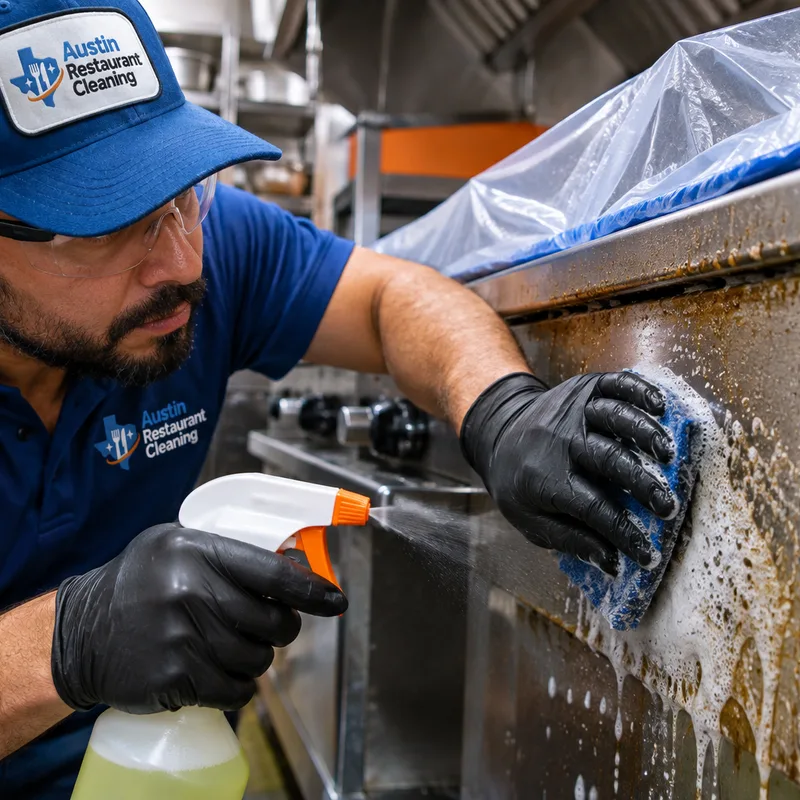
Grease behaves differently from ordinary dust. A professional kitchen deep clean uses dwell time, agitation, suitable degreasers, and controlled rinsing or wiping to loosen buildup without spreading residue across clean surfaces. Product choice must match the material. Stainless steel, painted walls, quarry tile, rubber gaskets, aluminum, and sealed flooring should not all receive the same treatment.
The cleaning sequence also matters. Crews generally work from high surfaces toward lower ones and from less soiled areas toward heavier buildup. Dry debris is removed before wet cleaning where practical. Food-contact surfaces require appropriate handling and should be left ready for the restaurant's required sanitizing procedure before food preparation resumes.
Austin's long warm season can increase the strain on busy kitchens, refrigeration areas, and waste-adjacent spaces. Restaurants near Sixth Street may also have narrow service windows because late operating hours compress the time available for overnight work. A written scope helps match the crew, products, and schedule to those conditions.
A defined working plan
Each service moves from an initial facility review to a written scope, prepared work area, planned cleaning sequence, and final review.
We start with the type of operation, approximate kitchen size, hours, equipment arrangement, problem areas, and reason for service. Photos or an on-site review may be needed to define the work accurately.
The scope identifies included rooms, equipment exteriors, elevated surfaces, cooler areas, floor work, and access needs. It also records exclusions such as inaccessible internal equipment components or systems requiring a licensed specialty contractor.
The restaurant may need to cool equipment, remove or protect food, clear shelving, identify shutoffs, provide authorized access, and arrange for movable items to be relocated. Preparation requirements are confirmed before the appointment.
The crew follows a planned sequence for dry removal, degreasing, agitation, detail work, and floor cleaning. Chemicals are used according to their labels, and cross-contamination between heavily soiled and finished areas is controlled.
A final review compares the work with the agreed list and identifies any area that was inaccessible, unsafe to address, or found to require repair rather than cleaning.
Cold-storage detail work
Walk In Cooler Cleaning should begin with a plan for food, shelving, temperature control, and safe access. Stored products may need to be transferred to suitable refrigeration before shelves and interior surfaces can be reached. Cleaning chemicals must be compatible with cooler materials, and excess water should be controlled around seams, electrical components, and fan areas.
A typical detailed scope may cover removable shelving, walls, doors, handles, gaskets, floors, corners, and accessible areas beneath racks. Heavy ice, a persistent leak, damaged gaskets, refrigerant issues, or mechanical faults are not cleaning problems. Those conditions should be handled by the appropriate refrigeration professional.
Restaurants in South Congress often operate around sustained dining traffic, so cooler work may need to be divided into controlled stages rather than treated as an open-ended cleaning task. East Austin properties can also have tight back-of-house layouts, making food relocation and rack staging part of the scheduling discussion.
Clear service boundaries
A useful proposal should name the rooms and surfaces included instead of relying on broad terms such as deep clean. Ask whether the quote covers equipment exteriors, sides, backs, undersides, floor-wall junctions, cooler shelving, high dusting, dining areas, and restrooms. Confirm who moves equipment and inventory, whether utilities must be shut off, and how much cooling time hot appliances require.
Restaurant deep cleaners should also distinguish cleaning from other regulated or specialized work. Cleaning a hood's accessible exterior surfaces is different from servicing the exhaust system. Internal hood, duct, and fan cleaning is specialized fire-safety work and should be handled under its own scope. Pest treatment, refrigeration repair, grease-trap pumping, mold remediation, and hazardous-material handling also require separate providers or procedures.
For properties along Rainey Street or in Downtown Austin, ask about loading, parking, elevator reservations, security access, and noise limits before selecting an appointment window. Those details can change the number of labor hours available and the way equipment and supplies reach the kitchen.
Pricing factors
Restaurant deep cleaning in Austin typically costs about $500 to $2,500 for a one-time job, while large kitchens, heavy grease buildup, extensive high dusting, or multiple coolers may cost more. Smaller targeted work can fall below that range.
Final pricing depends on square footage, soil level, equipment density, access, required crew hours, overnight scheduling, food or rack removal, and the exact surfaces included. A written estimate should separate routine cleaning from specialty exhaust, pest, refrigeration, or hazardous-material work. The exact cost is confirmed after a scope review or on-site assessment.
Check AvailabilityGet a written cleaning scope built around your kitchen, operating hours, access requirements, and priority areas before work begins.
Call to ScheduleScope and scheduling
Answers about after-hours work, preparation, equipment access, cooler cleaning, high dusting, exhaust boundaries, and recurring service.
Yes, after-hours scheduling may be available when the scope, access window, and required equipment cooling time are confirmed in advance. Late-night operations near Sixth Street or Rainey Street may require a carefully timed start because the kitchen must close, cool, and be cleared before degreasing begins.
A targeted cleaning may take several hours, while a full kitchen and cooler scope can require a full shift or staged visits. The timeline depends on kitchen size, buildup, equipment density, high-access work, inventory preparation, and the amount of time available between closing and the next prep period.
Heavy equipment is moved only when it is safe, authorized, and included in the written scope. Gas-connected, hard-wired, bolted, or mechanically sensitive equipment may need a qualified trade professional, while castered units may be movable after utilities and floor conditions are checked.
Food generally needs to be removed, relocated to proper cold storage, or securely protected before interior cooler surfaces are cleaned. Austin restaurants should plan this transfer in advance so required food temperatures are maintained while shelves, walls, gaskets, and floors are accessible.
High dusting should be done when exposed food and food-contact items are removed or protected and cooking has stopped. The crew must also assess ladder placement, overhead obstacles, vents, light housings, and the risk of dry debris falling onto lower surfaces.
Accessible exterior hood surfaces may be included, but internal exhaust hood, duct, and fan cleaning is a separate specialty scope. The proposal should state that boundary clearly so fire-safety exhaust work is not confused with general commercial kitchen cleaning.
The interval should be based on cooking volume, menu, equipment arrangement, grease production, operating hours, and the restaurant's routine cleaning capacity. A high-volume kitchen using fryers may need certain areas addressed more often than a lower-volume operation, so the practical approach is to set frequencies by area rather than assigning one interval to the entire property.
Tell Austin Restaurant Cleaning about the facility, operating schedule, priority areas, and current condition. We will help define a practical scope for the work.