
Commercial Kitchen Cleaning
Remove grease films, crumbs, splashes, and tracked-in soil from accessible equipment exteriors, preparation zones, washable vertical surfaces, and floors.
Serving Austin, Texas & surrounding areas
Open 24/7
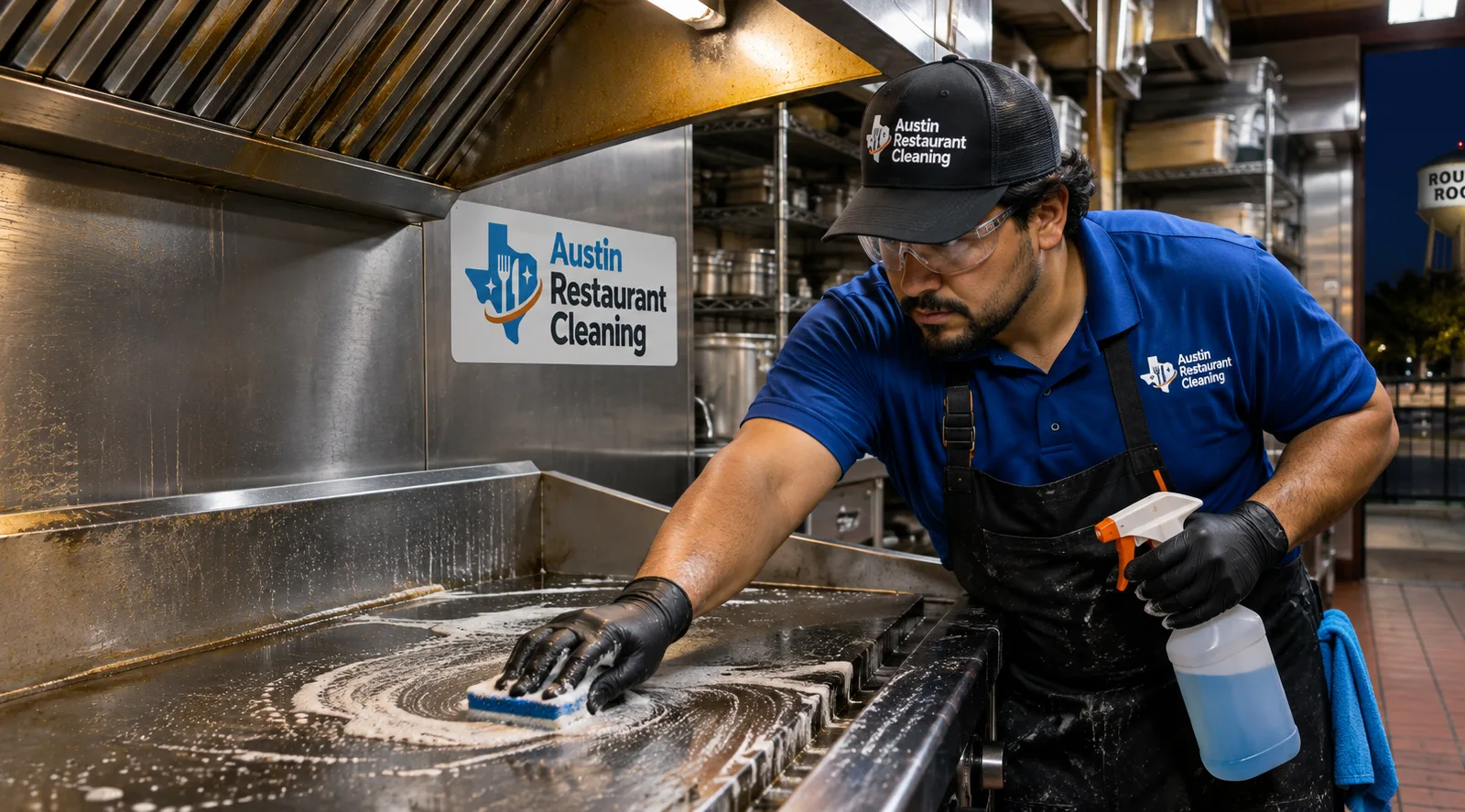
Restaurant cleaning · Round Rock, Texas
Keep the kitchen, dining room, restrooms, and service areas ready for every shift with a cleaning plan built around your hours and facility.
Built around restaurant operations
Restaurant Cleaning Round Rock businesses can depend on starts with a written scope, a practical schedule, and close attention to the areas that collect grease, food residue, and heavy foot traffic. Austin Restaurant Cleaning works with food service operators to plan recurring or targeted cleaning around opening hours, closing duties, deliveries, and kitchen access.
We are a restaurant service company Austin homeowners rely on, bringing the same straightforward communication and careful work to commercial clients in Round Rock. Before work begins, we identify the surfaces included, access requirements, priority areas, and tasks that remain with the restaurant's own staff. That distinction matters. A clear division of duties helps managers avoid gaps between routine employee cleaning and scheduled professional service.
Round Rock restaurants range from dining rooms near Downtown Round Rock to high-traffic locations around La Frontera, Interstate 35, and University Boulevard. Service timing should account for customer volume, late closing hours, shared loading areas, and the time equipment needs to cool before detailed cleaning can begin. We build the scope around the actual operation rather than applying a generic checklist.
Full-facility cleaning
A complete restaurant cleaning plan can include the commercial kitchen, food preparation areas, dishwashing zone, dining room, restrooms, entry, and back-of-house spaces. The exact work depends on the facility, equipment, flooring, operating schedule, and responsibilities already assigned to employees.
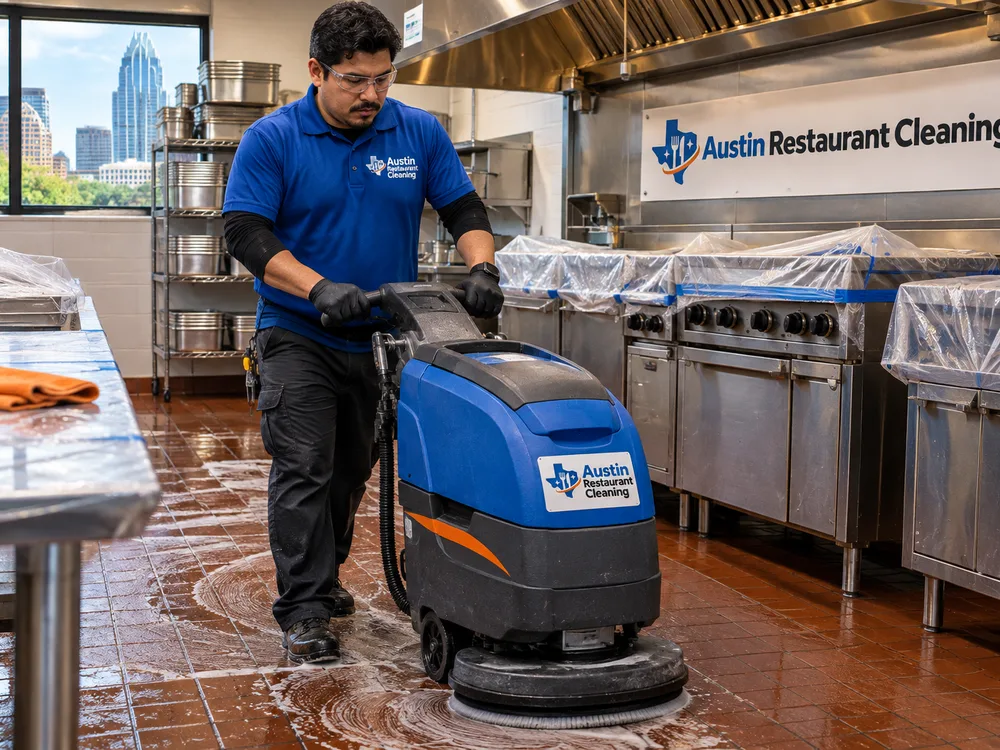
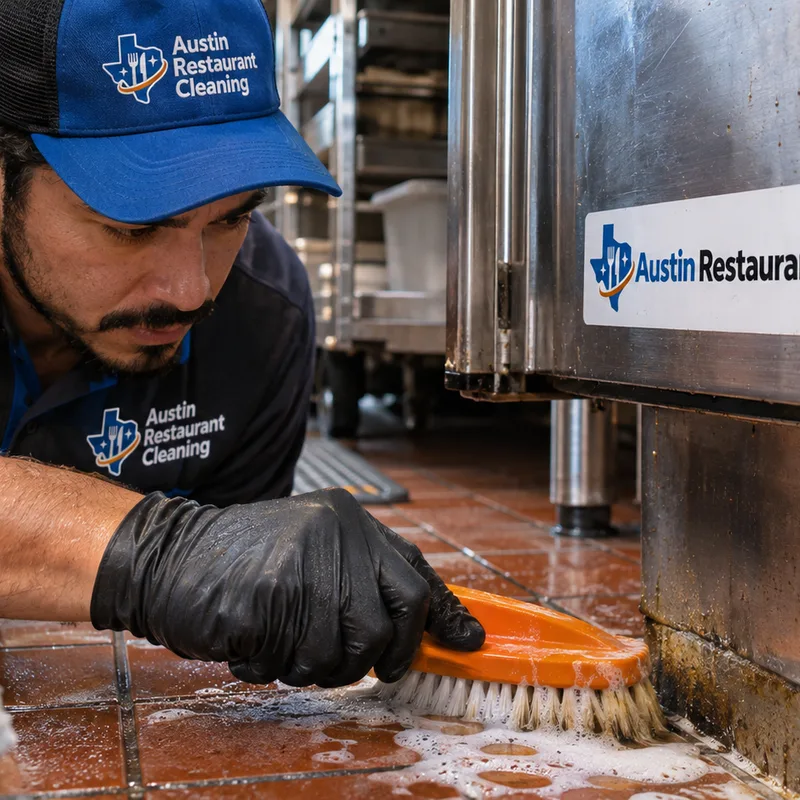
Kitchen work may include degreasing accessible equipment exteriors, cleaning counters and backsplashes, wiping stainless steel, removing soil around equipment legs, scrubbing washable walls, and cleaning floors with attention to edges and grout lines. Dining-area service can cover tables, chairs, booths, hard floors, entry glass, ledges, and touchpoints. Restroom cleaning includes fixtures, partitions, mirrors, dispensers, floors, and odor-producing buildup around toilets and drains.
Cleaning methods must match the surface. Stainless steel, quarry tile, sealed concrete, luxury vinyl tile, painted walls, and upholstered seating do not tolerate the same chemical strength or agitation. Product dwell time, dilution, soil type, and rinsing requirements all affect the result. Food-contact surfaces also need treatment consistent with the product label and the restaurant's sanitation procedures.
Facility priorities
Remove grease films, crumbs, splashes, and tracked-in soil from accessible equipment exteriors, preparation zones, washable vertical surfaces, and floors.
Clean tables, seating, ledges, entry glass, and floors so the customer-facing space is ready before doors open.
Address fixtures, partitions, handles, dispensers, mirrors, and floor edges using products suited to each surface.
Schedule deeper attention for baseboards, grout lines, wall buildup, equipment surrounds, and other areas that daily closing routines may not fully address.
Remove tracked soil and residue around entrances, service doors, thresholds, and accessible loading-area transitions.
Set a repeatable scope for waste removal, floor care, restroom cleaning, touchpoints, and agreed front-of-house or back-of-house duties.
Task-and-frequency planning
Restaurant cleaning is easiest to manage when every task has a frequency. High-use floors and restrooms may need attention each service night, while wall washing, grout scrubbing, or detailed work around movable equipment may be scheduled weekly, monthly, or as conditions require. A task-and-frequency schedule gives managers a concrete way to review the work.
Access is another part of planning. Hot equipment must cool before some surfaces can be cleaned safely. Staff may need to remove food, utensils, small appliances, or personal items before the crew arrives. If large equipment is to be moved, that responsibility should be agreed upon in advance. Some equipment may require a qualified technician rather than a cleaner to disconnect or reposition it.
Round Rock's warm summers can increase tracked dust and place extra demands on busy entrances and dining floors, especially at locations with steady vehicle traffic. Rain also changes floor conditions quickly. Entry matting, prompt soil removal, and suitable wet-floor procedures help keep the cleaning plan practical through changing weather.
A clear service plan
The process moves from a facility review to a defined scope, coordinated access, completed work, and schedule adjustments as operations change.
We discuss operating hours, kitchen layout, dining capacity, floor materials, restroom needs, access points, and areas causing recurring problems.
The written scope identifies included rooms, specific tasks, service frequency, exclusions, and any preparation the restaurant must complete before arrival.
We coordinate arrival times, keys or manager access, alarm instructions, equipment cooldown, chemical restrictions, and procedures for securing the facility.
The crew follows the agreed task list, pays attention to priority areas, and reports access issues or conditions that require a change in scope.
Seasonal traffic, menu changes, extended hours, renovations, and new equipment can alter cleaning needs. The schedule can be reviewed when the facility changes.
Defined service boundaries
Grease behaves differently from ordinary dust and soil. Effective removal often requires an appropriate degreaser, correct dilution, enough dwell time, mechanical agitation, and thorough removal of loosened residue. Using a stronger mixture than the label permits can damage finishes or leave unwanted residue. More chemical is not automatically better.
Professional restaurant cleaning supports a facility's sanitation program, but it does not replace employee food-safety duties or regulatory inspections. Restaurant staff remain responsible for food handling, temperature control, warewashing procedures, and required cleaning and sanitizing during operations. The City of Round Rock states that food establishment inspections are conducted through its Environmental Health program. A cleaning provider should never promise an inspection outcome.
Commercial exhaust systems also require specialized attention. Routine wiping of accessible hood exteriors is different from cleaning internal hood, duct, and fan components. The written scope should state whether exhaust-system work is excluded or assigned to a properly qualified specialist. Likewise, pest control, grease-trap pumping, hazardous-material cleanup, and equipment repair are separate services unless specifically arranged with suitable providers.
Pricing factors
Recurring restaurant cleaning in Round Rock typically costs about $0.10 to $0.30 per square foot per visit, while targeted deep cleaning commonly ranges from about $500 to $2,500 or more. Small dining areas with light kitchen work fall toward the lower end; large kitchens with heavy grease buildup cost more.
Final pricing depends on square footage, service frequency, soil level, floor type, equipment access, restrooms, after-hours requirements, and whether detail work is included. A walkthrough and written scope confirm the exact cost before service begins.
Check AvailabilityA facility walkthrough can turn a general request into a clear task list, workable service schedule, and written scope for your Round Rock restaurant.
Call to ScheduleScope and scheduling
Answers about frequency, after-hours access, pricing, kitchen preparation, inspections, exhaust systems, and floor care.
The right frequency depends on customer volume, menu, hours, flooring, and the duties handled by closing staff. Busy kitchens and restrooms may need recurring nightly service, while grout, walls, baseboards, and detailed equipment surrounds can follow a weekly, monthly, or condition-based schedule. A walkthrough helps assign each task a realistic frequency.
Yes, after-hours cleaning can be planned when access, alarms, equipment cooldown, and lockup procedures are agreed upon. For restaurants near Downtown Round Rock or late-service corridors along Interstate 35, the start time may need to follow the final customer departure and employee closing work.
Square footage, frequency, kitchen grease, floor material, equipment access, restrooms, and the requested level of detail drive the price. A lightly soiled dining room is different from a full kitchen deep clean involving wall buildup, grout agitation, and detailed floor edges. The exact price should follow an on-site review and written scope.
Yes, the restaurant commonly needs to secure food, remove utensils and small items, finish active cooking, and allow hot equipment to cool. Preparation requirements should be written into the service plan so the crew can reach agreed surfaces without disturbing food, tools, or operating equipment.
No, a cleaning service cannot guarantee an inspection result. The City of Round Rock's Environmental Health program conducts food establishment inspections, while restaurant operators remain responsible for food handling, temperature control, sanitation procedures, facility maintenance, and regulatory compliance. Professional cleaning can address the physical areas included in its written scope.
Internal hood, duct, and fan cleaning should be treated as a specialized scope and is not automatically included in routine restaurant cleaning. Accessible exterior wiping may be included when specified, but the agreement should clearly separate it from exhaust-system cleaning that requires specialized equipment and procedures.
Yes, the method can be matched to materials such as quarry tile, sealed concrete, luxury vinyl tile, and other washable commercial floors. Chemical compatibility, grout condition, slip concerns, and manufacturer care instructions should be reviewed before selecting degreasers, brushes, pads, or powered equipment.
Share your operating hours, facility needs, and problem areas with Austin Restaurant Cleaning. We can discuss the scope, access requirements, service frequency, and next steps for a written plan.