
Cooking-Line Degreasing
Grease is loosened on agreed equipment exteriors, walls, backsplashes, legs, and accessible surfaces using chemistry and agitation appropriate for each material.
Serving Austin, Texas & surrounding areas
Open 24/7
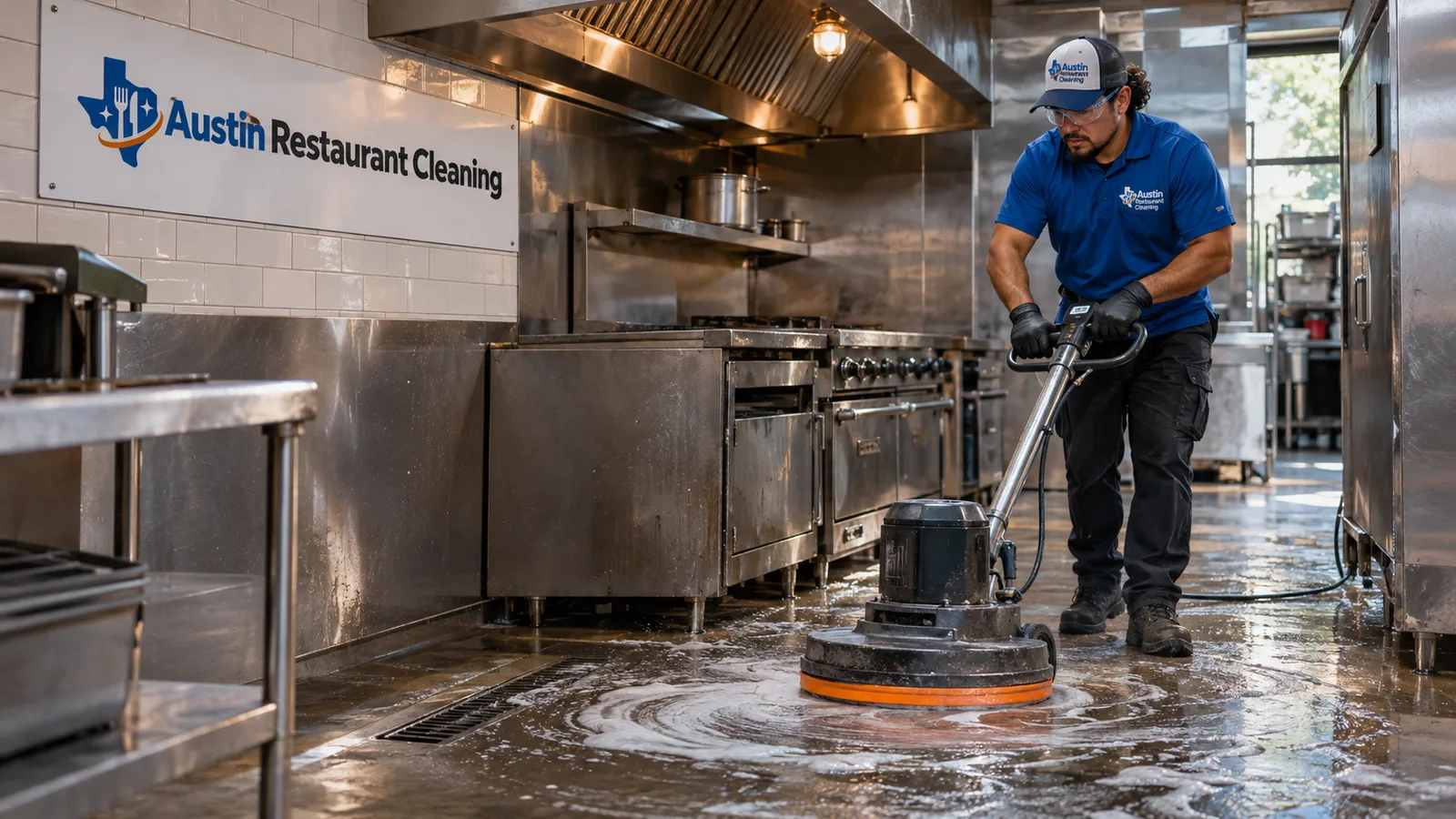
Kitchen deep cleaning · Georgetown, Texas
Remove hardened grease, food residue, and soil from commercial kitchen surfaces with a detailed cleaning plan built around your equipment, flooring, and operating schedule.
Built around the kitchen
Restaurant Kitchen Deep Cleaning Georgetown work should reach the buildup that routine closing duties leave behind. Grease collects along equipment edges, under cooking lines, around floor drains, and in grout or textured flooring. Once soil is packed into those areas, another quick mop will not remove it.
Austin Restaurant Cleaning develops the scope around the kitchen's actual condition. The work may include degreasing accessible walls and backsplashes, cleaning equipment exteriors and undersides, detailing baseboards and edges, scrubbing floors, and removing residue around drains. Food-contact surfaces require suitable products and careful rinsing according to product directions. Equipment is handled according to its material, construction, and manufacturer guidance.
We are Austin's trusted restaurant service team, planning the work around access, shutdown requirements, and the areas that need the most attention. Georgetown restaurants near the courthouse square often occupy buildings with compact layouts and limited staging room, while locations along Interstate 35 may have larger cooking lines and heavier service volume. Those conditions affect crew access, sequencing, and cleaning time.
Defined cleaning zones
A useful scope identifies surfaces and exclusions before work begins. Cooking-line buildup often requires an alkaline degreaser, dwell time, agitation, and controlled recovery of dirty solution. Stainless steel needs non-scratching tools and a final wipe with the grain. Tile and grout may need mechanical scrubbing, while resilient flooring requires chemistry and brush pressure suited to the finish.
Common cleaning areas include accessible walls, doors, kick plates, shelving exteriors, equipment sides and legs, floor-to-wall transitions, anti-fatigue mat areas, and floors beneath movable equipment. Special care is needed near electrical components, pilot lights, sensitive controls, and hot surfaces. Equipment should be shut down, cooled, and moved only when the agreed plan allows it.
Kitchen deep cleaning does not automatically include exhaust-duct cleaning, internal appliance repair, grease-trap pumping, pest treatment, or fire-suppression work. If one of those conditions is discovered, it should be documented and referred to the appropriate specialist rather than hidden by surface cleaning.
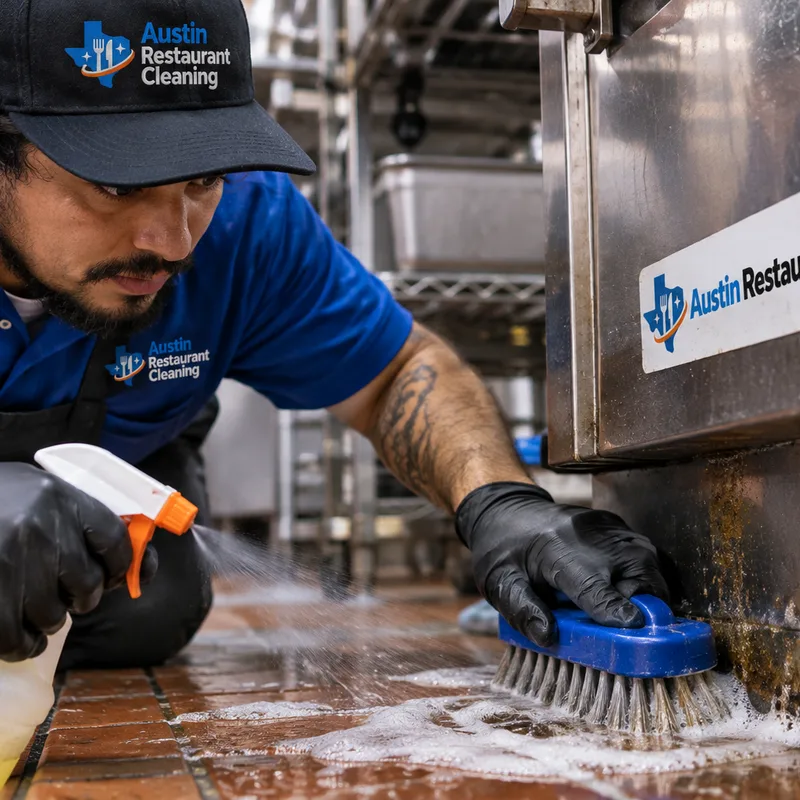
Cleaning capabilities
Grease is loosened on agreed equipment exteriors, walls, backsplashes, legs, and accessible surfaces using chemistry and agitation appropriate for each material.
Crews address buildup at kick plates, casters, baseboards, floor-to-wall transitions, and beneath equipment that can be moved safely within the agreed scope.
Mechanical scrubbing breaks soil loose from textured flooring and grout. Dirty solution is recovered instead of being pushed toward corners or left around drains.
Doors, handles, shelving exteriors, splash zones, and other touchpoints receive focused cleaning where grease films and food residue tend to collect.
The plan accounts for cooling time, prep activity, equipment access, and drying so the restaurant can protect its operating schedule.
The written scope identifies included surfaces, access requirements, exclusions, and any conditions that may need separate trade work.
Floor-focused cleaning
Restaurant Floor Cleaning Georgetown projects need more than strong chemicals. The first step is identifying the flooring and soil. Quarry tile and grout can hold grease in low joints, textured commercial tile traps residue in its profile, and resilient flooring may be damaged by excessive alkalinity or aggressive pads. A small test area helps confirm the method when the floor type or finish is uncertain.
The cleaning sequence usually starts with dry debris removal and protection of sensitive areas. Degreaser is then applied at the correct dilution and allowed to dwell without drying. A suitable deck brush or floor machine agitates the surface, with separate hand detailing at corners, grout lines, equipment legs, and edges. The released soil is recovered, followed by rinsing as required and a final inspection for remaining film.
Slip risk depends on more than visible dirt. Greasy residue, worn floor texture, pooling water, failing grout, and poor drainage can all contribute. Cleaning can remove bonded soil, but it cannot repair cracked tile, restore missing grout, or correct an improperly pitched floor. Those conditions should be identified so the operator can plan maintenance.
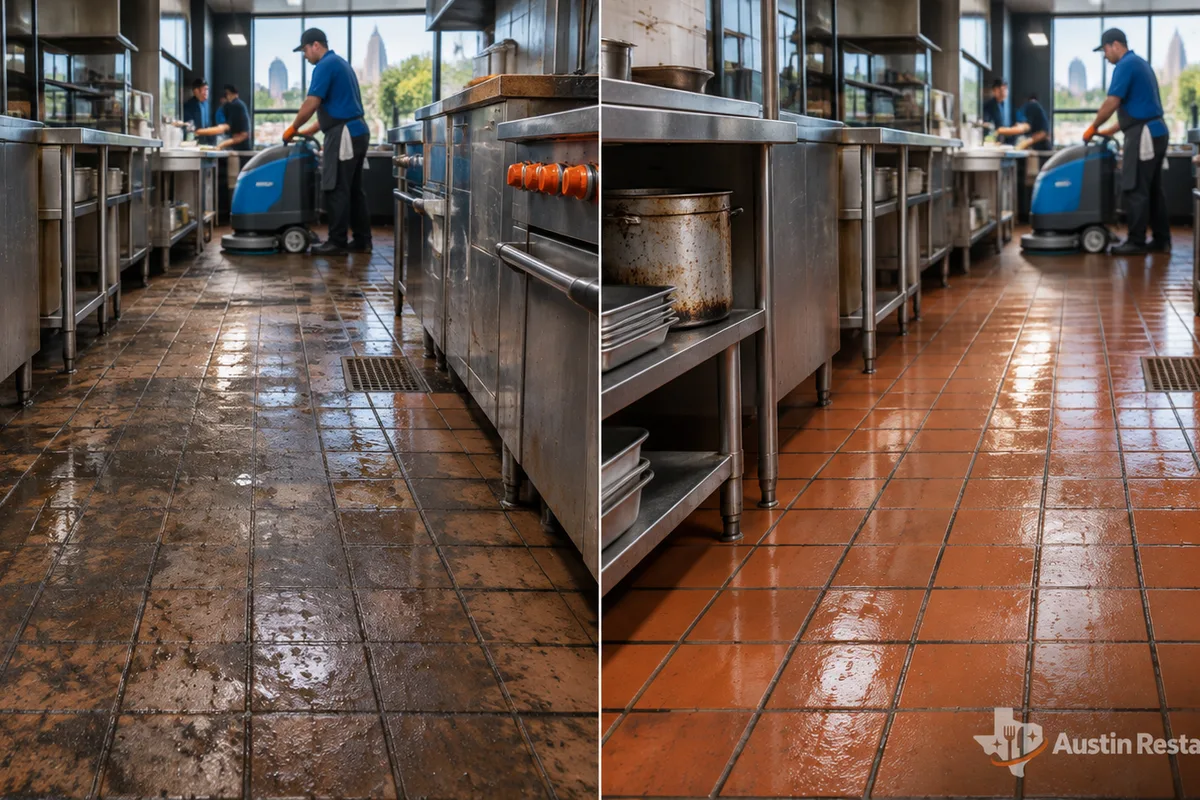
A controlled working plan
Each service moves from assessment and scope-setting through preparation, detailed cleaning, inspection, and a controlled return to use.
The discussion covers kitchen size, floor type, grease level, equipment arrangement, access, water availability, and the hours when cleaning can occur. Photos or an on-site review may be needed for a reliable scope.
Included surfaces, exclusions, equipment movement, shutdown duties, and expected working time are documented. The restaurant identifies sensitive equipment and any areas that must remain available.
Food, utensils, loose supplies, and exposed disposables are removed or protected. Equipment is cooled and secured as required, signs or barriers are placed, and dry debris is collected before wet work starts.
Cleaning solution is matched to the surface and soil, given proper dwell time, and mechanically agitated. Crews detail edges by hand and recover the released grease and dirty solution.
Surfaces are rinsed or wiped according to product directions. The crew checks for residue, standing water, missed edges, and areas where damage or permanent staining remains visible.
Floors need adequate drying time before normal traffic resumes. The operator receives notice of any access limitation, damaged grout, persistent staining, or maintenance issue observed during cleaning.
Pricing factors
Restaurant kitchen deep cleaning in Georgetown typically costs about $800 to $3,000, while large kitchens, severe grease buildup, or extensive equipment movement may cost more. A smaller floor-focused visit may fall below that range. These are general estimates, not fixed local prices.
Final pricing depends on square footage, floor material, soil level, equipment density, access, water recovery needs, overnight scheduling, and the surfaces included. Photos can help with early planning, but the exact cost is confirmed after the kitchen condition and requested scope are reviewed.
Check AvailabilityServing Georgetown kitchens
Georgetown's commercial kitchens operate in varied settings. Restaurants around the historic downtown square may have narrow service corridors, older floor transitions, and less room to stage equipment. Properties along Williams Drive often sit in neighborhood-serving commercial centers where the cleaning plan must account for shared access and nearby tenants. Larger developments near Wolf Ranch and the Interstate 35 corridor may provide more loading access, but longer cooking lines can increase degreasing and floor-detailing time.
Central Texas heat also matters. Warm kitchens can make cleaning solution dry too quickly, reducing useful dwell time and leaving residue if work is not controlled in smaller areas. Summer schedules may require tighter management of ventilation, water, and drying. A sound plan divides the kitchen into workable zones rather than flooding the entire floor at once.
Before service, operators should remove open food, utensils, paper goods, and portable countertop items. Staff should identify equipment that cannot be moved or exposed to moisture. These steps protect inventory and give the crew access to the surfaces named in the scope.
Get a written deep-cleaning scope based on your kitchen layout, floor material, buildup, access, and preferred service window.
Call to ScheduleScope and scheduling
Answers about service timing, equipment access, food protection, floor stains, exhaust-system boundaries, and recurring deep cleaning.
A small, accessible kitchen may take several hours, while a large or heavily soiled operation may require a full shift or staged visits. Equipment density, hardened grease, floor condition, water access, and drying time all affect duration. Compact kitchens around Georgetown's downtown square can take longer per square foot because crews have less room to move equipment and recover dirty solution.
After-hours scheduling may be available when the requested date, access, and scope allow it. The restaurant still needs to plan for equipment cooling, food removal, alarm or key access, and enough drying time before staff return. Kitchens serving late hours along Georgetown's Interstate 35 corridor may benefit from a staged plan when a single shutdown window is too short.
Movable equipment should be identified during scoping, but restaurant staff may need to empty, disconnect, or authorize movement before cleaning. Crews should not disconnect gas, electrical, plumbing, or fire-suppression components unless that work is specifically assigned to a qualified trade. Heavy or fixed equipment is cleaned around and beneath only where safe access exists.
Deep cleaning removes grease and soil, but it may not remove permanent discoloration, chemical etching, worn finish, or staining inside damaged grout. Quarry tile, textured tile, and resilient flooring respond differently to degreasers and mechanical agitation. A test area can help distinguish removable buildup from material damage before the full Restaurant Floor Cleaning Georgetown service begins.
Open food and exposed utensils should be removed or fully protected before deep cleaning starts. Degreasing and floor scrubbing can create splash, mist, and dirty recovery water, so the work area needs controlled access. The operator should also remove loose packaging and identify food-contact surfaces that require a specific cleaning and sanitizing procedure.
Exhaust-system work is included only when it is explicitly listed in the written scope and handled under the applicable requirements. General kitchen cleaning commonly addresses accessible exterior surfaces, but internal hood, fan, and duct cleaning is a specialized fire-safety service. Confirm the boundary before scheduling so required exhaust work is not mistaken for surface degreasing.
The right interval depends on cooking volume, grease production, flooring, ventilation, and the quality of daily cleaning. A high-output fryer line may need focused degreasing more often than a low-grease prep kitchen. Routine inspections of edges, grout, equipment undersides, and drain areas provide a better trigger than relying on a fixed calendar alone.
Tell Austin Restaurant Cleaning about the cooking line, floor type, problem areas, and operating schedule. We will help define a practical scope before work begins.